Soybean Harvest Guide
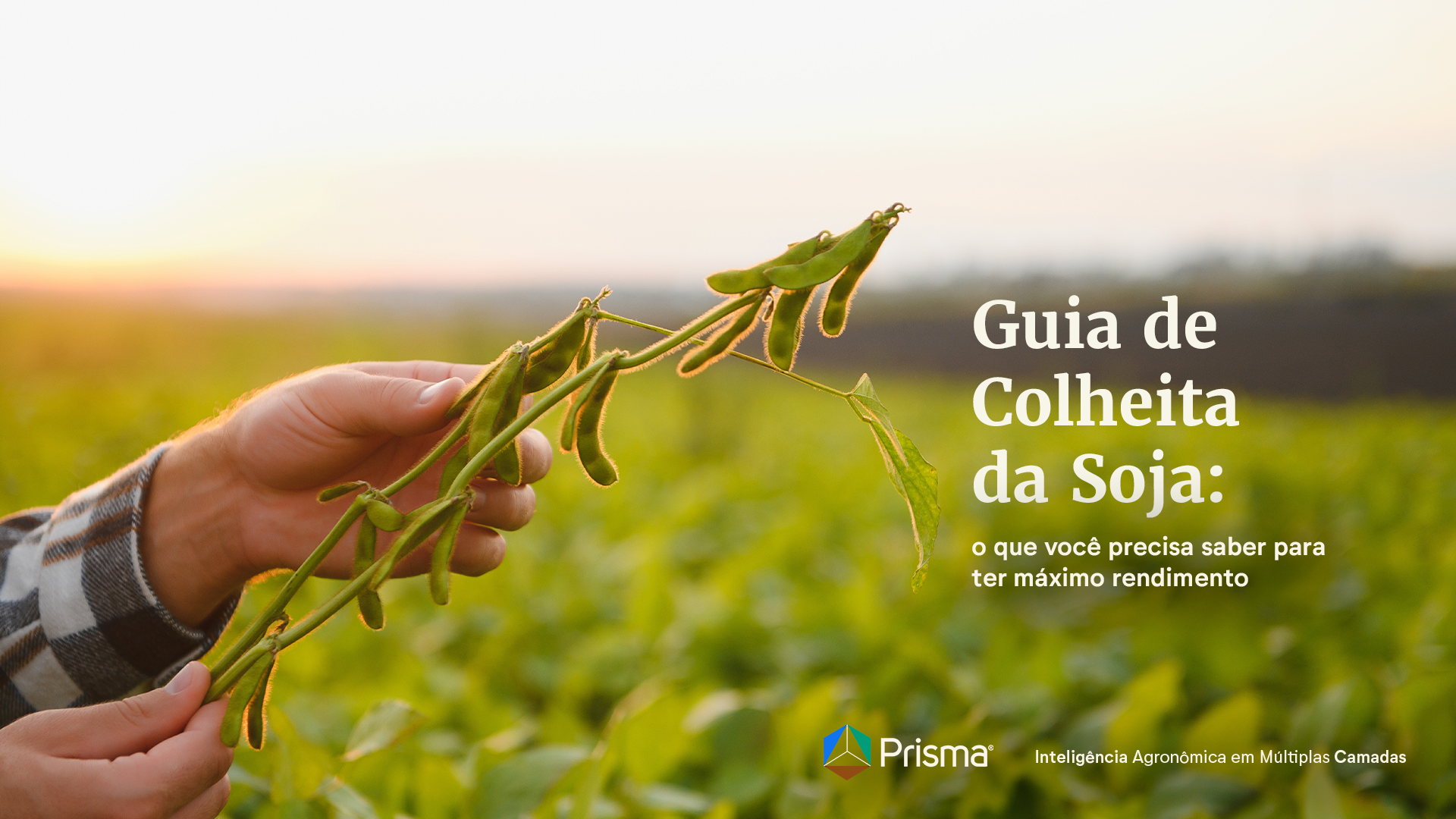 When time is running out and harvest is approaching, it is worth being prepared. As you prepare for the soybean harvest, understanding the factors that affect field operations and increase loss potential is essential to protect your yield.
In this article, we list the critical harvest steps and the risks to watch for in crop management.
Keep reading!
How to determine the ideal time to harvest soybeans
In Brazil, the soybean harvest generally begins in January and runs through the end of May, depending on the region.
In practice, three main factors directly influence the timing of the soybean harvest:
#1 Soybean harvest moisture
The ideal soybean harvest moisture is between 12% and 13%, as this helps prevent yield loss, storage concerns, and dockage at the grain elevator. However, under dry and hot conditions, soybeans with low moisture present a higher risk of grain cracking compared to corn. For this reason, in a high-risk drought, soybeans should be harvested as a priority.
#2 Soybean harvest maturity
When field sampling indicates that up to 50% of plants have a flower, this means soybean flowering has begun. Often, when soybeans flower early, they also tend to mature early, which means they will be ready for harvest well before longer-maturity varieties (RM).
#3 Weather conditions
Knowing exactly when your crop is at the greatest risk of weather-related damage is essential to preserve yield. For example, late-season rains can be extremely harmful, especially if soybeans have already passed the R6 growth stage. Therefore, pay close attention to weather conditions that may affect soybeans and plan ahead.
Soybean harvest steps
To coordinate all tasks associated with soybean harvest—from equipment preparation and maintenance to data records—it is essential for the producer to have a clear understanding of the ideal step-by-step process.
Accordingly, the following steps should be completed before and during harvest:
1. Determine the ideal time to harvest
Decisions about soybean harvest timing are based primarily on current seed moisture content and weather conditions. Therefore, closely monitoring these factors will help ensure an efficient, high-quality harvest.
2. Clean and repair grain storage areas
First, ensure that your grain bins are completely empty, with no remnants from last season. In addition, perform any necessary maintenance on bin mechanisms, ensuring they are rodent-proof. It is also recommended to treat bins for insects and remove any nearby debris to prevent future contamination.
3. Perform maintenance and safety checks on harvest equipment
To avoid issues during harvest, clean any residue from last season off grain-handling machines. In addition, check that fire extinguishers, warning lights, reflective tape, and SMV signs are operational, easily accessible, and visible. Likewise, ensure that everyone on the harvest team is informed about safety protocols, reducing risks in the field.
4. Make the necessary adjustments to reduce harvest loss
Recording equipment settings is a fundamental step. Although it may seem inconvenient to slow down at the beginning, taking time to measure harvest losses can make all the difference. In practice, well-made adjustments at the start of harvest can result in up to 5% yield saved.
5. Monitor and record soybean yield
Predictive maintenance depends directly on detailed records to track yields, field conditions, and issues identified throughout harvest. In addition, comparing these data year over year helps optimize decision-making for the next season. Since each field varies, relying on your own data is the best way to tailor your harvest strategy.
Finally, if your combine is equipped with a yield monitor, do not forget to calibrate it at the start of harvest, correctly setting up the fields and varieties in the combine monitor.
Issues to watch for during harvest
In crop management, many factors are outside the producer’s control. During the harvest rush, it invariably feels like there are many problems and not enough hours in the day to solve them all. Therefore, it is important to always focus on what you can manage and prioritize in order to streamline harvest.
Below, we list some issues that deserve attention:
Harvest loss
This is an issue that can have a major economic impact, reducing the season’s profitability. Fortunately, this is a problem you can control. Monitoring losses at the beginning of harvest and making adjustments to your equipment can reduce this loss.
Pod shatter
When this happens, loose grain falls to the ground or onto the grain table and does not enter the combine. Weather conditions and insect damage can put your soybeans at greater risk of pod-shatter losses.
After the grain dries to 13%, if drought conditions and/or alternating weather patterns of wetting and drying persist, the risk of pod shatter increases. For example, when soybeans have 11% moisture or less, pod shatter tends to occur. In addition, mite feeding can also make soybean pods more fragile and prone to shattering.
Therefore, it is essential to monitor closely and check how soybeans are behaving before soybean moisture drops to these risky levels.
Green stems
Green stem syndrome (GSS) can reduce seed quality and make it difficult to cut plants during harvest. Generally, green stems are present when pod set and early seed fill occur during a dry period, followed by late-season rain and good growing conditions.
A variety of factors lead to green stem syndrome, and there is no definitive cause. In any case, identifying whether GSS is present in your field can allow you to make the necessary adjustments.
It is worth noting that harvesting soybeans with GSS requires slower travel speeds. Therefore, keep an eye on cutter bar maintenance and make reel and other adjustments as needed.
Lodging
Similar to corn lodging, soybean lodging occurs when plants lean or fall due to weakness, delaying harvest and leading to yield loss. High plant populations are one of the main causes of soybean lodging.
In addition, inadequate nutrient levels, excessive rainfall or overuse of irrigation, and soybean stem borer damage can also increase the risk of lodging.
Lodging prevention begins at planting. Using low to moderate seeding rates and planting varieties that are less susceptible to lodging can help. Additionally, it is also important to continuously monitor the soil to ensure adequate potassium and nitrogen levels.
High moisture content
The high oil content in soybeans makes the grain more susceptible to deterioration. For this reason, “wet soybeans” are a common storage concern for producers.
If the moisture level exceeds the ideal percentage of 13%, the threat of spoilage or mold problems shortens the grain’s storage time.
Because moisture content is so important with soybeans, even simple adjustments—such as the time of day you harvest—should be taken into account. Most producers have to wait until late morning, when dew is no longer on the plants.
Using natural-air drying for soybeans is similar to drying corn. However, for heated-air drying of soybeans, it is recommended to set the drying air temperature lower than you would for corn. In practice, inlet temperatures of 70 to 130°C can be used at the dryer.
Conclusion
As we have seen, attention to detail and good agricultural production practices make all the difference in increasing a season’s productivity.
Indeed, with important adjustments before and during the soybean harvest, the producer increases the profitability of the season. In soybean harvest, planning ahead and monitoring progress in the field is the best way to protect your yield.
If you have questions about how to reduce harvest losses and achieve a successful season, contact a consultant at Prisma Agronomic Intelligence.

