Carbon market in agriculture: everything you need to know
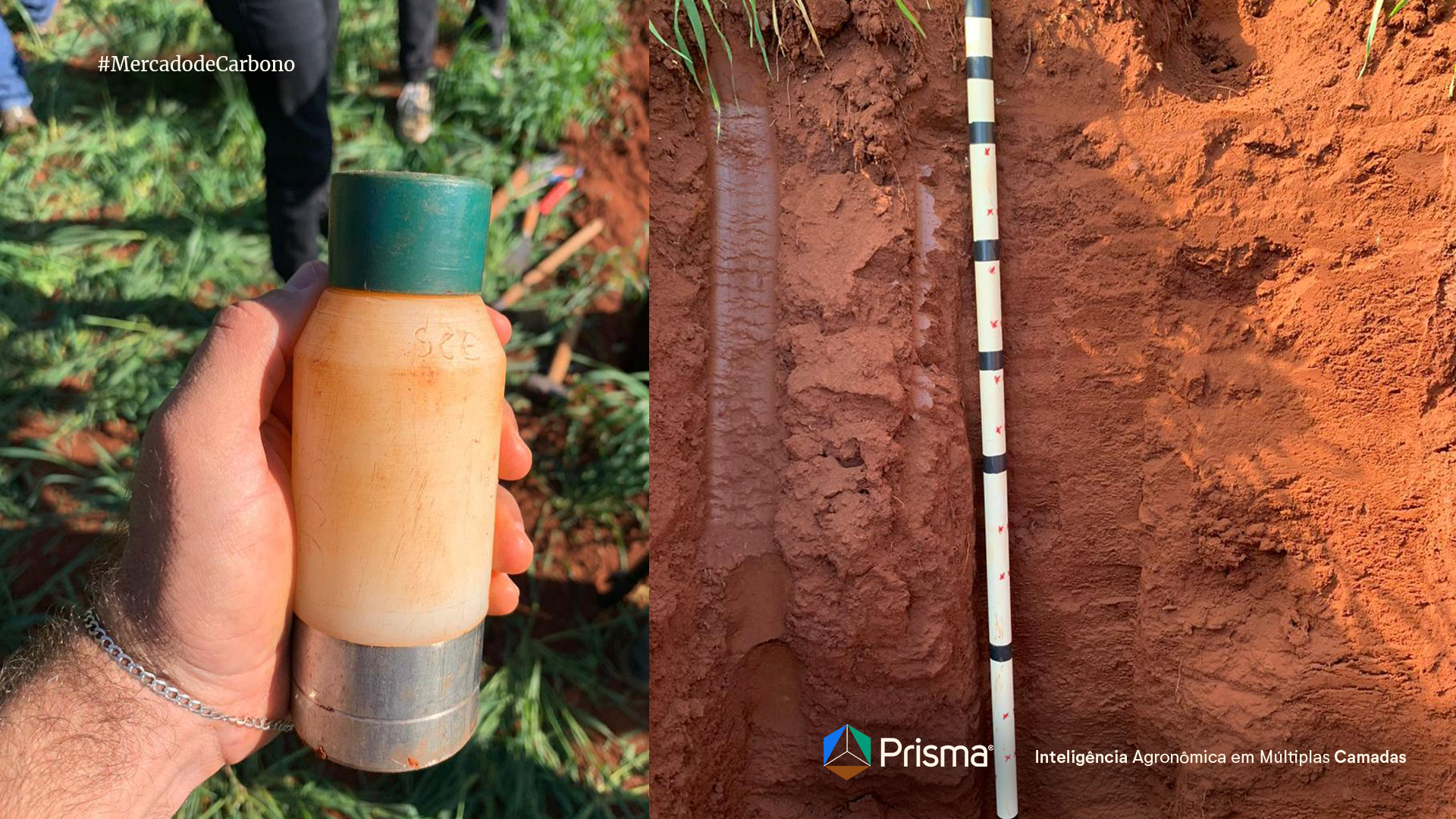
The landscape of carbon markets and programs has arrived in the agricultural sector, and beyond the agronomic benefits, there are many opportunities on the table!
Companies across all segments are increasingly using the purchase of carbon credits to achieve their sustainability goals. Among many, some can be achieved with the contribution of farmers, who have been prioritizing the adoption of “regenerative practices,” such as cover crops and no-till farming. However, among the many agricultural carbon market programs, there are significant variations in costs, risks, and benefits.
In this article, we have gathered the main information on the subject to guide you if you wish to understand and participate in the carbon market in agriculture.
Enjoy the read!
What is the carbon market and how does it work?
In short, carbon markets are trading systems in which carbon credits are generated, sold, and purchased. Companies or individuals can use the carbon market to offset their greenhouse gas emissions. To do so, they simply buy carbon credits from entities that remove or reduce greenhouse gas emissions.
It is important to know: a tradable carbon credit is equal to one ton of carbon dioxide or the equivalent amount of a different greenhouse gas reduced, sequestered, or avoided. When a credit is used to reduce, sequester, or avoid emissions, it becomes an offset and is no longer tradable.
As such, the measurement for negotiations is the ton of carbon dioxide equivalent. In other words, each carbon credit corresponds to 1 tCO2 that was no longer emitted into the atmosphere or that was eliminated.
The carbon credit market originated within the framework of the Kyoto Protocol in Japan in 1997. Since then, the agreement stipulates that industrialized countries must join efforts to reduce greenhouse gas emissions by an average of 5%.
In this market, surplus carbon credits from companies or governments that meet their pollutant reduction targets are for sale. The clients are those who emit more CO2 than they should and, therefore, buy credits to balance their environmental commitment.
How does the carbon market work in Brazil?
In Brazil, the Chamber of Deputies approved, in December 2023, the text of Bill 2,148/15,
which regulates the carbon market. The Brazilian Greenhouse Gas Emissions Trading System (SBCE) aims to limit greenhouse gas (GHG) emissions and allow the trading of assets representing GHG emissions, reductions, or removals in the country.
Since February 2024, the text has been moving through the Senate under number 182/2024. Within the scope of the project, the Brazilian carbon market will feature four main assets.
Carbon market in Brazil: meet the 4 assets
- Carbon credit: “a tradable and autonomous asset, representing an effective reduction in emissions or removal of one ton of carbon dioxide equivalent, with the legal nature of a civil fruit, obtained from projects or programs to reduce emissions or remove greenhouse gases developed based on an asset, with a market approach, submitted to national or international methodologies that adopt measurement criteria and rules, including forest maintenance and preservation, carbon retention in soil or vegetation, reforestation, sustainable forest management or restoration of degraded areas, recycling, composting, energy recovery, and environmentally appropriate waste disposal, among others” (Art. 2, VIII, as amended by Amendment 14).
- Verified Emission Reduction or Removal Certificate (CRVE): “a fungible and tradable asset, representing the effective reduction of emissions or removal of greenhouse gases of one ton of carbon dioxide equivalent, following an accredited methodology and with registration carried out within the scope of the SBCE, under the terms of a specific act by the SBCE management body” (Art. 2, IV).
- Brazilian Emissions Quota (CBE): “a fungible and tradable asset representing the right to emit one ton of carbon dioxide equivalent granted by the SBCE management body, free of charge or for a fee, to regulated facilities or sources” (Art. 2, VII).
- Environmental Credit Receivables Certificate (CRAM): “a nominative credit instrument, freely tradable, representing a promise of payment in cash or in the delivery of carbon credits, which constitutes an extrajudicial enforcement title” (Art. 2, IX).
Brazilian carbon market: who are the stakeholders involved?
As provided for in Bill 182/2024, the SBCE has four main actors:
- Operator: holder of a facility or source associated with a GHG-emitting activity;
- Certifier: entity holding methodologies for carbon credit generation, monitoring, reporting, and verification;
- Developer: entrepreneur who implements or provides assistance to the carbon credit generation project;
- Generator: natural or legal person who has ownership or usufruct of an asset that serves as the basis for carbon credit generation projects.
Brazil: voluntary carbon market vs. regulated market
In Bill 182/2024, one of the highlights is the recognition of the voluntary market as an environment for trading carbon credits voluntarily. In practice, this means that these credits will not be used to fulfill the obligations established by the SBCE in the regulated market.
To be used in the regulated market, carbon credits must be entered into the Central Registry and thus converted into CRVEs, once specific requirements are met, such as originating from methodologies accredited by the SBCE management body.
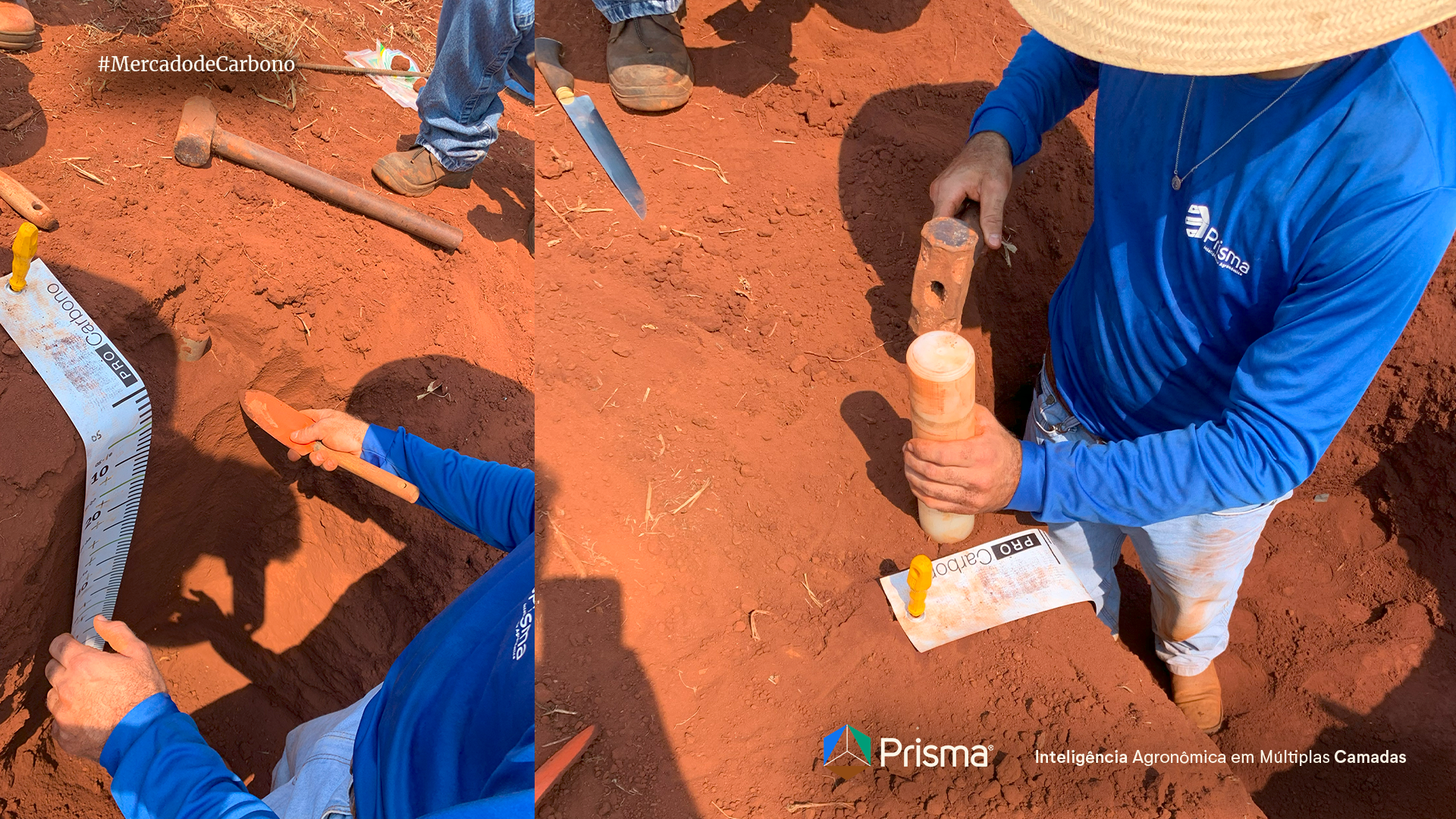
What are the advantages of the agricultural carbon market?
Farmers and ranchers have many opportunities to reduce their own carbon footprint, in addition to being one of the few activities capable of sequestering CO2 from the atmosphere and immobilizing it in the soil. But to reach the global net-zero goal, 22% of land needs to shift from traditional agricultural production to long-term carbon sequestration or carbon farming.
In this scenario, a series of new initiatives and market practices are necessary to achieve anything close to this level of change in land use.
Schemes such as carbon credits that allow landowners to generate new revenue streams through low-carbon farming are emerging. Furthermore, there is great expectation regarding the potential for private investments directed toward environmental measures that help mitigate climate change to become a significant market.
Agricultural practices that produce carbon credits offer financial incentives not only to reduce emissions but also to create environmental and social co-benefits. They help extend benefits to farmers and society at large.
Financial benefits of the agricultural carbon market
With crops yielding unpredictable results due to climate change, farmers can view carbon market credits as extra income. In countries where the carbon market is already regulated, the growing demand for carbon farming credits has stimulated the creation of programs and pledges by giant food retailers and agribusinesses.
But it is crucial that they price carbon higher than implementation costs to attract farmers’ attention. Current carbon prices vary widely depending on the specific type of agricultural activity.
Data from S&P Global 2022 shows carbon sequestration rates for different activities.
Companies, governments, and other entities buy carbon credits for about US$15/ton to US$20/ton of carbon to offset their emissions.
Over time, the trend is for carbon prices to increase significantly to at least US$70/tCO2e.
Environmental and social benefits of the carbon market
When farmers choose to participate in a carbon credit program, they contribute to other equally important initiatives. Among the co-benefits of the carbon market in agriculture, it is worth mentioning the reduction in fertilizer use and the increase in crop yields. Both are measurable and quantifiable benefits.
Low-carbon agriculture also results in social benefits. For example, there are more seasonal jobs for farmers dedicated to conservation practices.
In other words, agricultural carbon credits create a new revenue stream for farmers. This is an important movement because it encourages them to transition to sustainable agricultural practices and adopt regenerative agriculture.

How does the carbon market work in agriculture?
To understand the importance of the carbon market in agriculture, let’s revisit a concept. After all, why are the market and carbon credits so important?
The idea is that, with this mechanism, entities responsible for CO2 emissions have the possibility to reduce their emissions or pay for the efforts of farmers or others who are doing the work of removing CO2 from the air. The payment is in the form of a carbon credit, with each credit representing one metric ton of carbon reduced or removed.
Crops, grasses, and other plants sequester CO2 from the air, but they also release it when they decompose. Still, with proper soil carbon capture and agricultural practices, they can reduce CO2 very effectively.
See how the soil captures CO2 in a natural carbon sequestration cycle.
The time carbon remains in the soil before returning to the air varies. It depends on several factors, such as climate and soil composition. For example, disrupting the soil structure, such as converting forests or grasslands into agricultural land, can accelerate the release of captured carbon.
On the other hand, low-carbon farming methods, such as no-till and cover cropping, can slow carbon loss. They can even help increase soil carbon levels.
Studies show that the last 200 years of agriculture have emitted ~100 billion metric tons of CO2 (GtCO2). This is more than 3 times the carbon released by all human activities in 2019 – 43.1 GtCO2.
So, where do carbon credits come in?
Carbon credits in agriculture operate like crops in some respects.
For example, if you produce soybeans to sell, the buyer will want to know their quality first. They will weigh the soybeans and verify the quality before buying them. Knowing the level of demand, the rural producer provides the information to convince them to buy their product.
In addition to grain quality, buyers have a new evaluation parameter. This is because carbon credits measure and monitor the amount of carbon sequestered in the farm’s soil and the amount of carbon emissions reduced.
Some agricultural practices, such as regenerative agriculture, give farmers the potential to turn their farms’ capacity to sequester carbon into cash through carbon credits.
Specifically, carbon credits are created based on the amount of carbon sequestered by the soil and, therefore, represent reduced emissions above the ground.
Potential of the carbon market in Brazil
In the global scenario, it is estimated that the demand for carbon credits could increase 15 times or more by 2030, and 100 times by 2050. McKinsey predicts that the carbon credit market should jump from about US$1 billion in 2021 to at least US$50 billion in 2030.
Following this movement, companies worldwide are setting net-zero or carbon neutrality goals to reduce or eliminate net emissions from their operations.
Brazil, home to the world’s largest tropical forest, the Amazon, has privileged conditions to develop the carbon market, according to the consultancy McKinsey. It points out that 15% of all global potential for carbon capture through natural means is in national territory.
Today, for rural producers, the current challenge is to understand how the carbon market is being structured in Brazil, seeking to learn about opportunities to participate in the market, benefiting the environment, and building a sustainable operation on the farm.
As happened in other countries, in Brazil, the agricultural sector was left out of the regulated carbon market and the SBCE guidelines. Even so, interested producers can participate in the voluntary market by adopting a series of good agricultural practices, such as:
- No-till farming;
- Crop-livestock and/or crop-livestock-forest integration;
- Rational use of inputs;
- Conversion of degraded areas into arable land;
- Recovery of degraded pastures;
- Intensification of livestock farming;
- Use of additives that reduce methane emissions in livestock;
- Reforestation (a practice that accounts for about 80% of carbon credit projects in the voluntary market due to the longevity of the projects and the ease of applying MRV methodologies).
Adopting these and other practices allows the producer to ensure the generation of carbon credits in the voluntary carbon market, later used to offset emissions from other sectors, companies, products, or countries. To access the carbon market, the producer needs to pay attention to several steps:
- Create an emission reduction and/or carbon capture project: define how carbon will be removed from the atmosphere through more sustainable agricultural and livestock practices.
- Seek certification and auditing: the producer must have an entity responsible for carrying out the auditing and certification process and follow the regulations, methodologies, and specifics from the beginning of the project;
- Focus on MRV – Measure, Report, and Verify: the producer will have to conduct monitoring and surveys to track the project and defined activities, ensuring efficiency in carbon removal and credit generation. This is the phase that involves the greatest effort, challenge, and investment, and could even make the project unfeasible;
- Market the carbon credit: finally, with the approval of the certifying company, the carbon credit will be generated and can be traded with interested parties.
Did you like the content and want to know more about this and other topics?
Continue following the Prisma blog and receive exclusive content.

