Regenerative agriculture
Regenerative agriculture is gaining momentum worldwide. With a long list of benefits for farmers and its ability to combat modern challenges, it is easy to understand why investing in this approach is advantageous.
In this article, we present the main concepts of regenerative agriculture, its principles, and how it works.
Enjoy the read!
What is Regenerative Agriculture?
Regenerative agriculture proposes a holistic, systems-based vision guided by several principles. The goal is to make the soil more productive and biodiverse over time.
To maintain healthy soil, one of the main components is organic matter, such as a plant root, an earthworm, or a microorganism. However, in most cases, cultivated lands have lower levels of soil organic matter than before. This occurs due to conventional land management practices, such as extensive and extractive pasture cultivation—that is, without nutrient replacement or the use of agronomic management.
Therefore, in regenerative agriculture, improving soil organic matter brings a series of advantages to agricultural production:
- Reduces and stops erosion;
- Increases aggregate stability;
- Contributes to water infiltration and retention, favoring the nutrient cycle and plant health;
- Increases crop resilience and yield;
- Strengthens biodiversity and much more.
The increase in soil organic matter also allows carbon to be moved from the atmosphere and deposited in the soil, where it can also be a positive contribution to the planet—a capacity few activities possess as agriculture does. Thus, carbon does not remain in the atmosphere as a greenhouse gas.
It is important to know that there are no hard and fast rules for learning, implementing, or transitioning to regenerative agriculture, as approaches and techniques vary according to the producer’s profile and the farm’s region.
6 key principles of regenerative agriculture
In farm management, regenerative agriculture incorporates six key components. They are:
- Understand the Context: economic, personal, community, ecological, climatic, bioregional, etc.
- Minimize the impacts of farming on the environment: to this end, it is important to efficiently utilize chemical fertilizers, pesticides, and more.
- Establish living roots: when plants photosynthesize, they pump carbon-based exudates into the soil to feed microbes during the growing season. Therefore, the greater the number of living roots, the more this can occur.
- Provide soil armor: also known as ground cover. Ideally, there should always be some living or dead debris covering the soil. After all, when exposed to external factors such as high temperatures and dry spells, crop health can be compromised.
- Integrate livestock and crops: this approach is extremely useful for a variety of reasons, including: fertilization, aeration, increased organic matter, water infiltration, resistance to soil erosion, and more.
- Improve biodiversity: add diversity to what you are growing. Some alternatives include planting various trees and shrubs to form hedgerows across your farm, installing owl boxes, integrating bees, and planting diverse multi-species cover crops.
Not all of these principles necessarily need to be used at the same time. However, they tend to work most effectively when combined in a regenerative agriculture approach.
But how does regenerative agriculture actually work?
Regenerative agriculture practices focus on improving soil health and biodiversity, protecting it from physical, chemical, and biological erosion.
Healthy soil can receive and store more water, allowing farmers to achieve high yields even during droughts.
Healthy soil also provides more nutrients to plants, allowing for better management of fertilizer investments. With healthier plants, farmers avoid excessive costs for insecticides, herbicides, pesticides, and fungicides.
All of this helps farmers increase their profitability while reducing operational and input costs.
Regenerative Agriculture vs. Conventional Agriculture
Historically, conventional agriculture began to gain ground and prominence during the industrial boom in Western nations. New machine-driven processes defined for production were quickly transferred to the agricultural sector.
In contrast, regenerative agriculture requires the adoption of new practices, such as the efficient use of pesticides and the production of healthier, nutrient-rich foods. In this way, in addition to increasing productivity, regenerative agriculture contributes to reversing climate change and restoring our soil.
Regenerative agriculture: the future of agribusiness has already begun!
So far, we have seen the essentials of regenerative agriculture. A new, much more sustainable form of agricultural production is beginning to take shape.
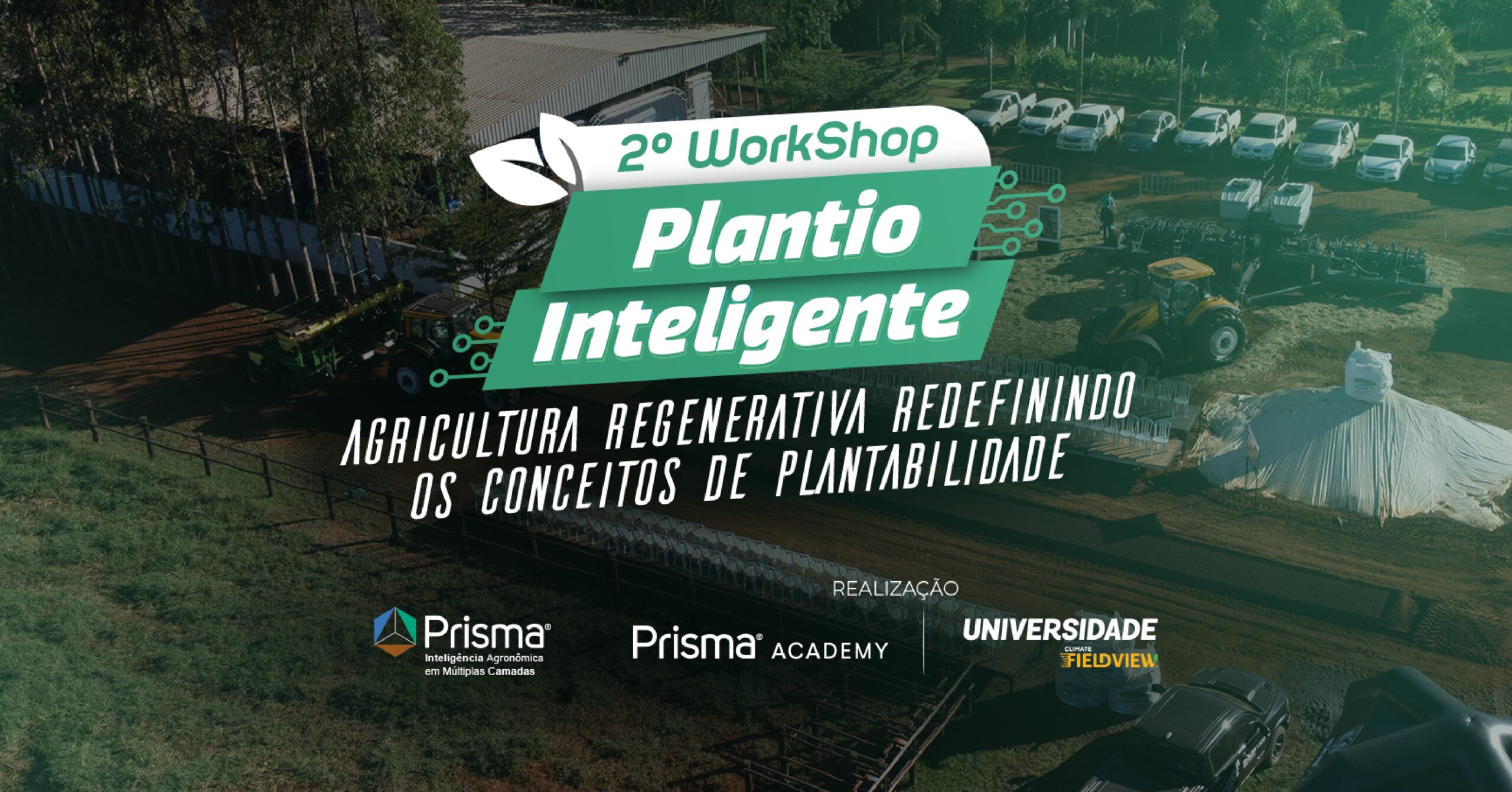
Did you enjoy learning about this approach and want to know more? You can watch the full video with the highlights of the 2nd Smart Planting Workshop held on June 19, in Rio Verde (GO).
Click here and watch it right now!

